 English
 Español
  Português
  русский
  Français
  日本語
日本語  Deutsch
  tiếng Việt
  Italiano
  Nederlands
  ภาษาไทย
  Polski
  한국어
한국어  Svenska
  magyar
  Malay
Malay  বাংলা ভাষার
  Dansk
Dansk  Suomi
Suomi  हिन्दी
  Pilipino
  Türkçe
  Gaeilge
  العربية
  Indonesia
  Norsk
Norsk  تمل
تمل  český
český  ελληνικά
  український
  Javanese
  فارسی
فارسی  தமிழ்
தமிழ்  తెలుగు
  नेपाली
  Burmese
  български
  ລາວ
ລາວ  Latine
  Қазақша
  Euskal
  Azərbaycan
  Slovenský jazyk
  Македонски
  Lietuvos
  Eesti Keel
  Română
  Slovenski
  मराठी
मराठी  Srpski језик


How long is the service life of a UV sterilizer?
As a UV pactitioner, I first refute the irresponsible answer above: the more the UV lamp can meet continuous work, the fewer times it is switched on and off, and the longer its life. It is exactly not what the above said. It does not need to be started when working. This is very harmful to extending the life. This is because the UV lamp is a gas discharge lamp. Each start-up is an impact on the filament, which will cause the electronic powder on the filament to sputter. The disappearance of the electronic powder will be earlier than the damage of the filament. Even if there is a preheating function, it is better to reduce the number of starts as much as possible.
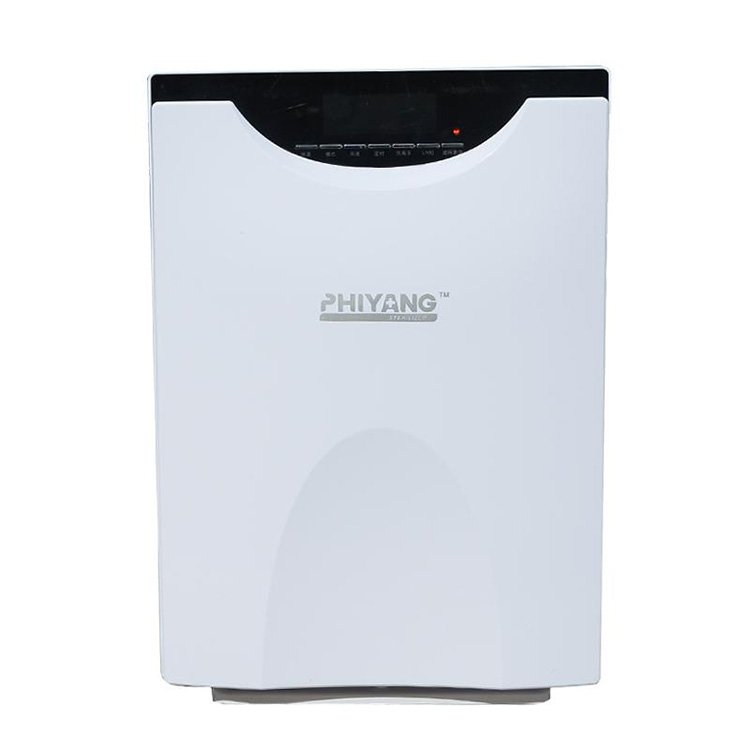
The life of the UV lamp cannot be independently said to be how many hours, because it is wrong to judge the life of the lamp by whether it can still be lit. The UV sterilizer is used for sterilization, and the sterilization mainly relies on UVC short-wave ultraviolet rays (200-280nm). Each bacteria needs to be inactivated only when it is exposed to a certain amount of ultraviolet radiation. Therefore, the sterilization effect depends on: dose = intensity x time. Most UV lamps are replaced because the intensity cannot meet the requirements rather than because they cannot be lit.
There is no unified standard for ultraviolet lamps. Generally speaking, low-pressure mercury lamps are used in household or small sterilizers. The commonly used lifespan of such lamps in the market is defined as the time that the lamp can be used when the intensity of the lamp tube decays by 20%, which is generally 8,000-9,000 hours. If a longer lifespan is required, a long-life coating can be selected, which can generally reach 12,000 or even 16,000 hours, but the price is also higher.
Send Inquiry


X
We use cookies to offer you a better browsing experience, analyze site traffic and personalize content. By using this site, you agree to our use of cookies.
Privacy Policy