 English
 Español
  Português
  русский
  Français
  日本語
日本語  Deutsch
  tiếng Việt
  Italiano
  Nederlands
  ภาษาไทย
  Polski
  한국어
한국어  Svenska
  magyar
  Malay
Malay  বাংলা ভাষার
  Dansk
Dansk  Suomi
Suomi  हिन्दी
  Pilipino
  Türkçe
  Gaeilge
  العربية
  Indonesia
  Norsk
Norsk  تمل
تمل  český
český  ελληνικά
  український
  Javanese
  فارسی
فارسی  தமிழ்
தமிழ்  తెలుగు
  नेपाली
  Burmese
  български
  ລາວ
ລາວ  Latine
  Қазақша
  Euskal
  Azərbaycan
  Slovenský jazyk
  Македонски
  Lietuvos
  Eesti Keel
  Română
  Slovenski
  मराठी
मराठी  Srpski језик


How Does a Drying Oven Ensure Reliable and Uniform Heat Treatment?
Article Summary
A drying oven is a core piece of equipment in laboratories, medical facilities, manufacturing plants, and research institutions where precise temperature control and consistent drying performance are required. This article provides a comprehensive explanation of how a drying oven works, the problems it solves, and how to select the right model for different operational needs. It focuses on real customer pain points such as uneven heating, unstable temperatures, contamination risks, and energy inefficiency. By understanding design principles, performance parameters, and application scenarios, users can significantly improve process reliability and product quality.
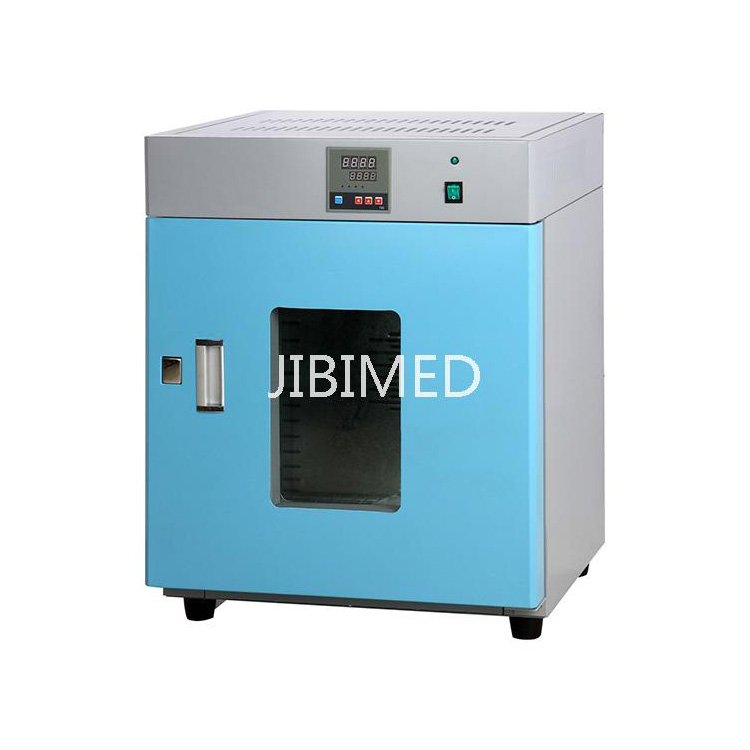
Table of Contents
- Drying Oven Overview
- Key Customer Pain Points
- Working Principles of a Drying Oven
- Common Types of Drying Ovens
- How to Choose the Right Drying Oven
- Performance Factors and Process Control
- Drying Oven Parameter Comparison
- Application Scenarios
- Maintenance and Safety Considerations
- Frequently Asked Questions
- Conclusion and Contact Us
Drying Oven Overview
A drying oven is a temperature-controlled chamber designed to remove moisture, solvents, or volatile substances from materials through controlled heating. Unlike basic heating devices, a drying oven is engineered to maintain uniform temperature distribution, stable airflow, and precise time control, ensuring consistent results across all samples or products.
Drying ovens are widely used in medical sterilization preparation, laboratory testing, pharmaceutical production, electronics manufacturing, and industrial material processing. JIBIMED designs drying ovens that prioritize accuracy, durability, and operational safety to meet the needs of both laboratory-scale and industrial-scale users.
Key Customer Pain Points
Users often encounter performance and reliability issues when operating or selecting a drying oven. These problems can directly affect productivity and compliance.
- Uneven temperature distribution causing inconsistent drying
- Long heating and recovery times reducing efficiency
- Inaccurate temperature control affecting test results
- Material contamination due to poor airflow design
- High energy consumption during long operating cycles
- Limited chamber capacity or poor internal layout
Addressing these pain points requires both proper equipment selection and an understanding of how drying ovens function under real operating conditions.
Working Principles of a Drying Oven
A drying oven operates by converting electrical energy into controlled heat, which is distributed throughout the chamber using natural or forced convection. The objective is to maintain a stable temperature environment that allows moisture or volatile substances to evaporate efficiently.
- Heating elements generate consistent thermal energy
- Air circulation systems distribute heat evenly
- Temperature sensors provide real-time feedback
- Control systems regulate temperature accuracy
The balance between heating power, airflow design, and control precision determines the overall performance of a drying oven.
Common Types of Drying Ovens
Different drying applications require different oven configurations. Understanding the main types helps users avoid mismatched equipment.
- Gravity Convection Drying Oven – Suitable for gentle drying and heat-sensitive materials
- Forced Air Drying Oven – Provides faster drying and uniform temperature distribution
- Vacuum Drying Oven – Ideal for low-temperature drying and solvent removal
- High-Temperature Drying Oven – Designed for industrial heat treatment processes
How to Choose the Right Drying Oven
Selecting a drying oven requires a systematic evaluation of operational requirements rather than focusing on a single parameter.
- Required temperature range and stability
- Chamber volume and internal configuration
- Material sensitivity to heat and airflow
- Control system precision and programmability
- Energy efficiency and long-term operating cost
JIBIMED supports users by offering technical consultation to ensure the selected drying oven matches the actual process demands.
Performance Factors and Process Control
Drying oven performance is influenced by both equipment design and operational discipline. Even a high-quality oven requires correct usage to deliver optimal results.
- Proper loading to avoid airflow blockage
- Consistent calibration of temperature sensors
- Appropriate drying time settings
- Routine inspection of heating components
Maintaining stable process conditions reduces variability and improves repeatability across drying cycles.
Drying Oven Parameter Comparison
| Parameter | Laboratory Drying Oven | Industrial Drying Oven |
|---|---|---|
| Temperature Range | Ambient to 300°C | Ambient to 500°C+ |
| Temperature Uniformity | High precision | Process-oriented |
| Chamber Volume | Small to medium | Medium to large |
| Control System | Digital programmable | PLC or advanced controllers |
Application Scenarios
Drying ovens are used across a wide range of industries where controlled heat treatment is essential.
- Medical and laboratory sample preparation
- Pharmaceutical raw material drying
- Electronics component moisture removal
- Industrial coating and curing processes
- Research and material testing
Maintenance and Safety Considerations
Routine maintenance ensures long-term drying oven performance and operational safety.
- Regular inspection of heating elements
- Cleaning of internal chamber surfaces
- Verification of temperature accuracy
- Ensuring proper ventilation around the oven
Following manufacturer-recommended maintenance schedules helps minimize downtime and extends equipment lifespan.
Frequently Asked Questions
What materials can be processed in a drying oven?
Most solid materials that require moisture removal or thermal conditioning can be processed, provided they are compatible with the temperature range.
How is temperature uniformity ensured?
Uniformity is achieved through optimized airflow design, sensor placement, and precise control systems.
Is a drying oven suitable for continuous operation?
Yes. High-quality drying ovens are designed for extended and continuous operation under stable conditions.
How often should a drying oven be calibrated?
Calibration frequency depends on usage intensity but is typically recommended on a regular scheduled basis.
Conclusion and Contact Us
A drying oven is a critical investment for organizations that rely on controlled heating and consistent drying results. By understanding working principles, performance factors, and selection criteria, users can avoid common operational issues and achieve reliable outcomes. Choosing a trusted manufacturer further enhances long-term stability and efficiency.
JIBIMED provides robust and precise drying oven solutions tailored to laboratory, medical, and industrial applications. If you are planning to upgrade your equipment or need expert guidance on selecting the right drying oven for your process, contact us today to explore how JIBIMED can support your operational goals with confidence.
Send Inquiry


X
We use cookies to offer you a better browsing experience, analyze site traffic and personalize content. By using this site, you agree to our use of cookies.
Privacy Policy